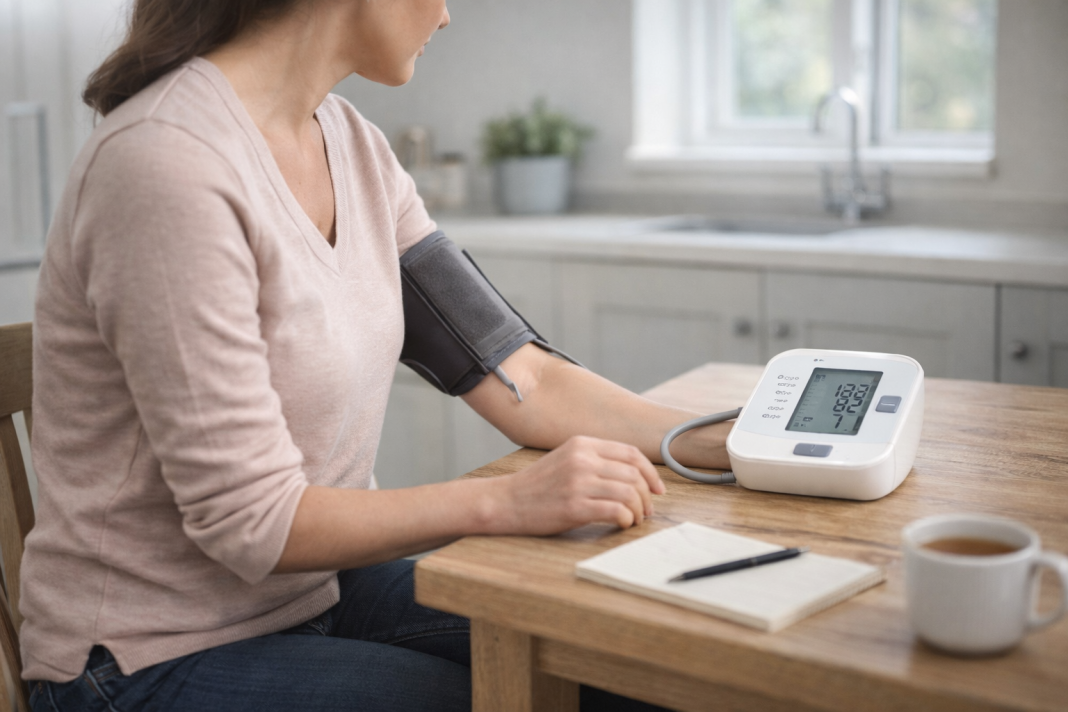

Home blood pressure monitoring can be one of the most useful health habits you ever build, if you use a validated upper-arm monitor and measure properly.
NICE guidance supports home blood pressure monitoring (HBPM) and sets HBPM targets lower than clinic readings (because home readings tend to be more representative).
This guide gives you:
- The best clinically validated monitors you can buy in the UK
- what to prioritise (and what to ignore)
- the fastest way to avoid inaccurate readings
Important: This article is educational and does not replace medical advice. If you have symptoms like chest pain, severe breathlessness, neurological symptoms, or feel acutely unwell, seek urgent medical care.
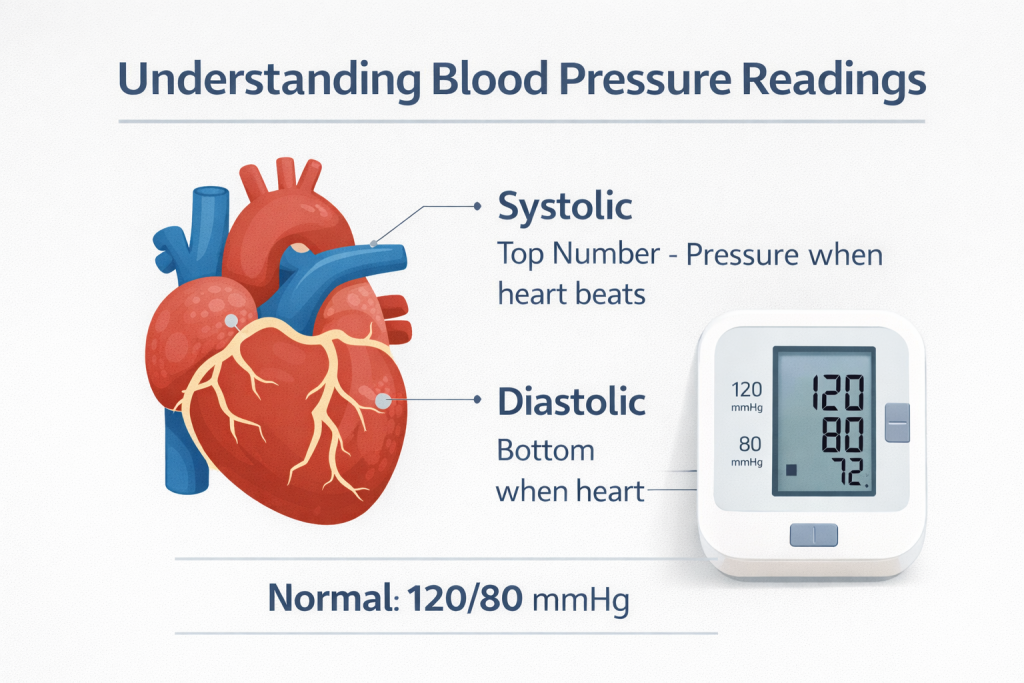
Quick picks (most people should choose one of these)
Best overall (most users)
OMRON X3 Comfort (upper arm, easy cuff, reliable brand)
Best balance of accuracy features + comfort + usability.
Best budget (still reliable)
OMRON X2 Basic (upper arm, simple, great value)
If you want a no-nonsense device that works without fuss.
Best for large arms / cuff-fit problems
OMRON M3 Comfort (Intelli Wrap cuff 22–42 cm)
Cuff size and fit are a huge cause of wrong readings — this model’s wide cuff range helps.
Best for AF screening / irregular rhythm flagging (advanced)
Microlife BP B6 Connect (AFIBsens, Bluetooth)
If you’re specifically looking for an extra rhythm screen feature.
Best “simple and clinically validated” alternative
A&D UA-651 / UA-611 (upper arm)
Solid, straightforward options often listed among trusted monitors in UK contexts.
The only 3 things that actually matter (ignore everything else)
1) Clinical validation (non-negotiable)
In the UK, the safest shortcut is: choose a monitor that is BIHS-approved / clinically validated.
If a monitor isn’t validated, don’t buy it — even if it has “thousands of reviews”.
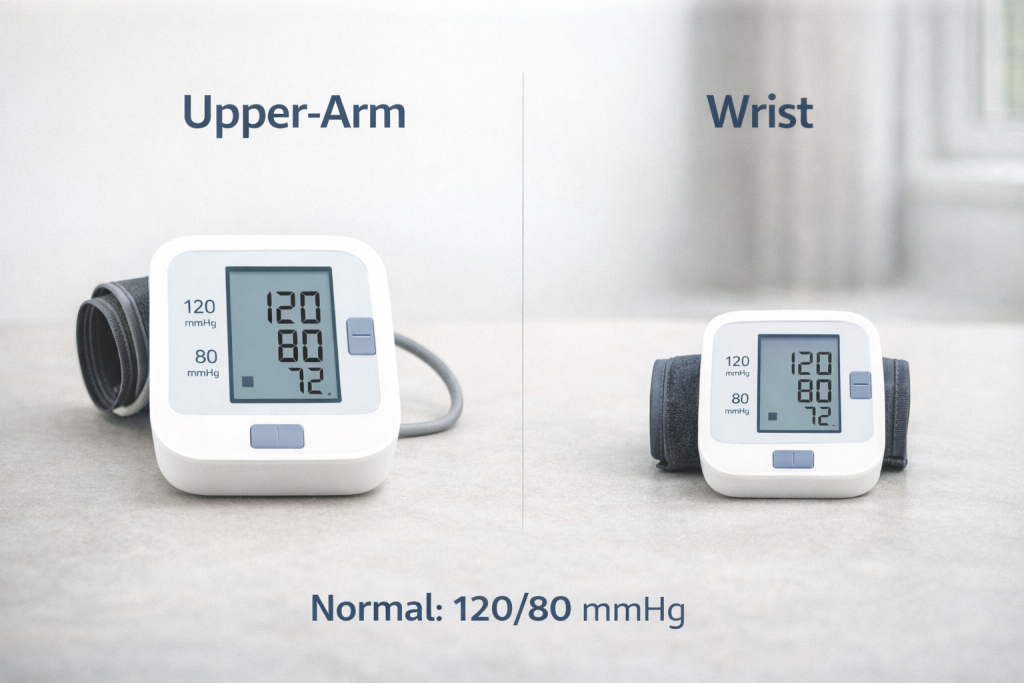
2) Upper-arm cuff (prefer this over wrist)
Upper-arm monitors are generally more reliable for home use than wrist monitors unless used extremely carefully. If you do use wrist, it must be positioned at heart level exactly — many people don’t.
3) Correct cuff size (this is where most people fail)
A cuff that’s too small can read falsely high; too large can read falsely low. This isn’t minor — it can change decisions.
Before buying, measure mid-upper arm circumference and match it to the device cuff range.
Best monitors: detailed picks (UK)
1) OMRON X3 Comfort — Best overall for most homes
Who it’s for: most adults who want a reliable, easy device
Why it wins: user-friendly cuff design + strong home use reputation
Pros
- Easy cuff placement (reduces user error)
- Comfortable + good for repeat measurements
- Good home tracking features
Watch-outs
- Not the cheapest option
Best for: first-time buyers, families, long-term monitoring
2) OMRON X2 Basic — Best budget pick
Who it’s for: you want reliable readings without paying extra for app features
Why it wins: simple, robust, minimal friction
Pros
- Great value
- Straightforward operation
- Irregular heartbeat detection
Watch-outs
- Basic memory; no advanced tracking features
Best for: tight budgets, “I just want a reliable BP number”
3) OMRON M3 Comfort — Best for cuff fit & comfort
Who it’s for: larger arms, inconsistent readings, or anyone wanting easier cuff placement
Why it wins: cuff range supports more body types; cuff fit is a common error point
Pros
- Wide cuff range
- Easier to position correctly
- Good for households with multiple users
Watch-outs
- Slightly bulkier than basic models
Best for: cuff-fit problems, shared household use
4) Microlife BP B6 Connect — Best for tech + AF screening feature
Who it’s for: you want Bluetooth tracking and an extra rhythm screen feature
Why it wins: strong feature set for people who genuinely benefit from tracking and sharing
Pros
- Bluetooth tracking
- AF screening feature (device-specific screening capability)
Watch-outs
- App features are only worth it if you’ll actually use them
- Not needed for most people
Best for: motivated trackers, people sharing readings with clinicians
5) A&D UA-651 and A&D UA-611 — Best straightforward alternative
Who it’s for: you want a simple, clinically positioned home monitor alternative
Why it wins: practical, uncomplicated, common “trusted list” style options
Pros
- Straightforward
- Upper-arm cuff
- Often positioned in clinical/home-trust contexts
Watch-outs
- Fewer “nice-to-have” comfort/app features
Best for: reliable basic monitoring without the brand premium
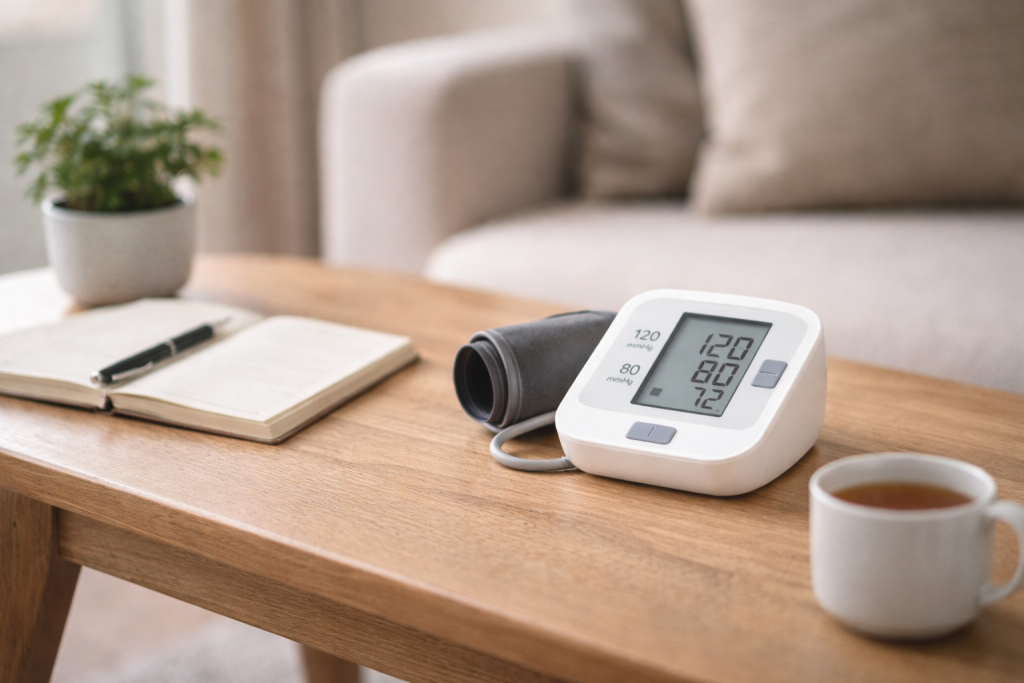
How to measure BP at home (the NHS method, simplified)
This matters as much as the device.
Do this:
- Sit upright with back supported
- Feet flat on the floor
- Rest arm on a table (relaxed)
- Cuff on bare skin (not over clothes)
- Don’t talk during measurement
- Repeat a second reading after a few minutes
Avoid this before measuring:
- exercise
- caffeine
- smoking
- rushing up stairs
(If you do, your reading can be misleading.)
What numbers should you aim for?
NICE notes that home targets are lower than clinic targets. A common HBPM target is below 135/85 mmHg for many adults under 80 (your clinician may personalise targets).
If your home readings are consistently high, the useful step isn’t panic — it’s:
- confirm correct technique and cuff size
- measure over several days
- share a structured log with your GP/clinic
The Healthiyer recommendation (how to choose in 60 seconds)
If you do nothing else, follow this:
- Choose upper arm + clinically validated
- Choose correct cuff size
- Choose based on your personality:
- “Keep it simple” → OMRON X2 Basic
- “Best all-round” → OMRON X3 Comfort
- “Cuff fit issues / large arms” → OMRON M3 Comfort
- “I will actually use an app” → Microlife B6 Connect
| Model | Best for | Validation | Cuff range | Key strengths | Watch-outs | Link |
|---|---|---|---|---|---|---|
|
OMRON Upper-Arm (Doctor Pick) Upper-arm automatic monitor |
Best overall accuracy + ease |
Check BIHS list Validated models vary by exact version |
Typically ~22–42 cm (varies) | Reliable readings, clear display, easy home use, often clinically validated | Must choose correct cuff size; ensure exact model is validated | Check price on Amazon UK |
|
Withings BPM Connect Upper-arm, smart app sync |
Best smart app ecosystem |
Check BIHS list Validation depends on exact model/version |
Typically ~22–42 cm (varies) | Syncs to phone, easy trend tracking, clean design, good for long-term monitoring | More expensive; app reliance; still needs correct technique | Check price on Amazon UK |
|
Budget Upper-Arm Monitor Value option (upper-arm) |
Best budget (if validated) |
Only if validated Use BIHS list to confirm |
Varies (check listing) | Affordable, basic home monitoring, good for simple tracking | Many cheap models are not validated; cuff sizing can be limited | Check price on Amazon UK |
|
Wrist Monitor (Not first choice) Only if upper-arm not possible |
Occasional use / mobility issues |
Usually less reliable Technique-sensitive |
One-size wrist cuff (varies) | Easy to put on, portable, may suit some users | More prone to inaccuracy; must hold wrist at heart level exactly | Check price on Amazon UK |
Next step (coming soon): Blood Pressure Snapshot tool
A single BP reading is noise. Trends are signal.
Coming to Healthiyer: a free Blood Pressure Snapshot to:
- log readings
- compute averages
- spot patterns
- generate a clean summary to share with your GP
References
NICE — Hypertension in adults: diagnosis and management (NG136)
Official UK guidance on diagnosing and managing hypertension, including home blood pressure monitoring recommendations.
https://www.nice.org.uk/guidance/ng136
NICE — Visual summary of hypertension recommendations (NG136)
Visual summary document with threshold targets and key recommendations, including clinic vs home blood pressure ranges.
https://www.england.nhs.uk/london/wp-content/uploads/sites/8/2019/11/NICE-NG136-Visual-Summary.pdf
NHS — Check your blood pressure reading
NHS tool that explains how to interpret your blood pressure numbers and provides context for home monitoring.
https://www.nhs.uk/health-assessment-tools/check-your-blood-pressure-reading
NHS — Blood pressure test overview
NHS guide on how blood pressure is measured and why accurate measurement matters.
https://www.nhs.uk/tests-and-treatments/blood-pressure-test/
British & Irish Hypertension Society (BIHS) — Validated blood pressure monitors
Official list of clinically validated home blood pressure monitors recommended for accuracy.
https://bihs.org.uk/blood_pressure_technology/bp_monitor_validations.aspx
NHS England — Home blood pressure monitoring policy
Guidance from NHS England on validated monitors and home blood pressure monitoring practice.
https://www.england.nhs.uk/ourwork/clinical-policy/cvd/home-blood-pressure-monitoring/
Medaval — List of BPMs recommended by the BIHS
External PDF list of home blood pressure monitors recommended by BIHS (UK & Ireland) — useful reference for product validation.
https://www.medaval.ie/docs/lists/BPMs-recommended-by-the-BIHS-UK-and-IRL.pdf
NIH — Overview of blood pressure monitor validation research
Research summary on the importance of clinical validation and factors affecting accuracy.
https://www.ncbi.nlm.nih.gov/articles/PMC9957729/